OEM vs Aftermarket vs Used: What’s Actually Worth Buying?
27 Jan 2026
OEM vs Aftermarket vs Used: What’s Actually Worth Buying?
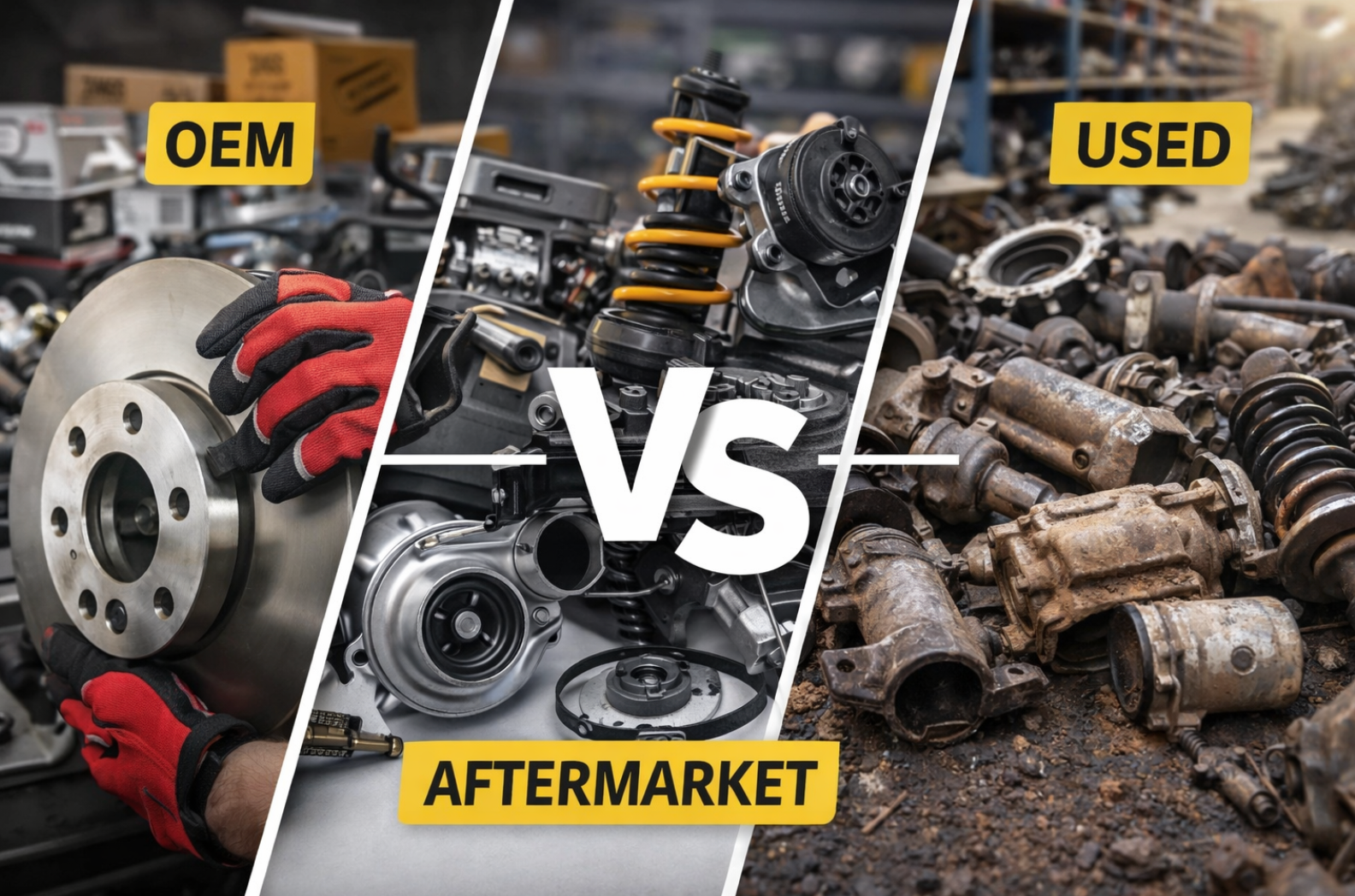
If you’ve ever Googled a part number at midnight, you already know the problem: there are a million options “genuine”, “OEM”, “OE”, “aftermarket”, “pattern”, “refurb”, “breaker”, “used but mint”… and the price difference can feel suspicious.
This guide is here to make the choice simple (and safe), without the fluff. We’ll break down what each category really means, when each one is worth it, and how to avoid the most common expensive mistakes.
First, a quick translation: what these labels actually mean
Genuine / OE (Original Equipment)
This is the part sold under the vehicle manufacturer’s brand (e.g., BMW, Audi, Ford). It’s what most people picture when they hear “dealer part”.
-
Pros: Exact fit, consistent spec, clear provenance
-
Cons: Usually the most expensive, and sometimes you’re paying extra for packaging/branding rather than a different factory
OEM (Original Equipment Manufacturer)
This one confuses people because it’s used loosely online.
In the strict sense, OEM means the company that manufactured the original part that may also supply the car brand (for example, the same manufacturer might produce parts that end up in “genuine” boxes, and also sell under their own brand).
-
Pros: Often the “genuine-quality” option without the “genuine price”
-
Cons: Online listings sometimes misuse “OEM” as a marketing word, so you still need to verify brand + part number
Aftermarket
Anything made outside the car maker’s official supply chain. This ranges from brilliant upgrade brands to absolute rubbish. Aftermarket isn’t one quality level, it’s a whole universe.
-
Pros: Huge choice, competitive pricing, upgrades available (brakes/suspension/cooling etc.)
-
Cons: Quality varies wildly; fitment can be hit-and-miss if you buy based on “looks similar”
Used / Second-hand (breaker yard, private seller, recycled)
An original part that’s been removed from another vehicle. This can be the best value in the car world or a false economy depending on the part.
-
Pros: Often cheapest; can be the only option for older/discontinued parts
-
Cons: Unknown history, wear/age, and sometimes hard-to-spot damage
The real question isn’t “which is best?” it’s “best for what?”
Here’s the truth: the “right” category changes depending on the part, the risk, and the goal.
Ask yourself these 3 questions:
-
Is this part safety-critical?
-
Is fitment exacting (tight tolerances, sensors, modules)?
-
Is the car daily-driven or a weekend/project car?
Once you answer those, the best option usually becomes obvious.
Safety-critical parts: don’t gamble to save £30
If a part failing could realistically cause loss of control, longer stopping distance, or a dangerous breakdown your buying rules should tighten.
Brakes: focus on standards and traceability
For replacement brake linings (pads/shoes) in many markets, compliance with recognised approval standards matters. UNECE Regulation No. 90 (commonly referred to as “R90”) is one of the key approval frameworks used for replacement brake linings.
That doesn’t mean “aftermarket is bad”. It means:
-
Buy known brands with clear approvals/specs for your exact application
-
Avoid mystery listings with vague wording and no proper identifiers
Best picks (general rule):
-
Genuine/OE when you want “fit-and-forget”
-
OEM brand when you can verify it matches the original spec
-
Quality aftermarket when you’re upgrading or you trust the brand
-
Used brakes: usually a “no” for wear items (pads/discs) unless you truly know what you’re doing and can measure/inspect properly
Suspension and steering: used can be okay… but be selective
Used suspension parts can be fine - if they’re not wear-heavy rubber components or unknown-condition joints.
-
Often OK used (if inspected): knuckles, brackets, subframes, anti-roll bars
-
Be careful used: shocks/struts, control arms with bushes already pressed in, ball joints, top mounts
A lot of the “used suspension regret” comes from buying something that looks okay but has internal wear you can’t see.
Electronics, modules, sensors: the hidden cost is your time
If you’ve ever replaced a sensor twice because the first one was “cheap and should work”, you know what I mean.
When genuine/OEM is often worth it
-
MAF/MAP sensors
-
ABS sensors (depending on model)
-
Electronic throttle parts
-
Control modules (where coding/compatibility matters)
Because the cost isn’t just the part, it’s:
-
diagnosing again
-
refitting
-
chasing intermittent faults
-
(sometimes) dealing with coding / compatibility issues
Best rule: if it can trigger warning lights, limp mode, or weird drivability issues, lean OEM/Genuine unless you’re confident in the aftermarket brand.
Body, trim, interior: used is the secret weapon
Interior and trim is where used parts shine, because “function” often matters less than “fit and finish.”
Great used buys:
-
Seats, door cards, trims
-
Mirrors (especially complete assemblies)
-
Switch packs (if confirmed working)
-
Spoilers, bumpers, grilles (condition-dependent)
Just make sure you check:
-
exact variant (facelift/pre-facelift differences are brutal)
-
mounting points
-
colour codes (if you care)
-
whether it’s missing clips/brackets
The “upgrade” category: aftermarket can beat genuine
There are loads of parts where aftermarket isn’t a compromise, it’s the point.
Examples:
-
Performance brake kits
-
Uprated cooling fans/radiators
-
Suspension upgrades (coilovers, bush kits)
-
Ignition upgrades (depending on vehicle)
-
Wheels
This is where specialist brands can outperform the original design for modern driving conditions - as long as you choose reputable manufacturers and correct fitment.
“Will aftermarket parts void my warranty?” (the sensible version)
This gets thrown around constantly, but it’s rarely explained properly.
Competition rules in the UK/EU ecosystem have historically aimed to ensure independent repairers can access spare parts and compete effectively, because that benefits consumers and supports safe vehicle operation.
In plain English:
-
A manufacturer can’t just blanket-refuse everything because you didn’t buy a dealer-branded part.
-
But if a non-genuine part causes a failure, you could be on the hook for that specific issue.
If you’re under warranty and unsure, the safest play is:
-
genuine/OE for sensitive systems, or
-
OEM brand parts where you can clearly evidence equivalence (brand, part number, spec)
(Not legal advice — just practical risk management.)
How to shop smart (without needing a mechanical engineering degree)
1) Match the identifier, not the photo
Photos are often generic. What matters is:
-
part number (OE number)
-
brand
-
fitment notes (engine code, chassis range, facelift notes)
2) Decide what you’re optimising for
Pick your priority:
-
Lowest cost today (used / budget aftermarket)
-
Lowest cost over time (OEM / known aftermarket)
-
Zero headache (genuine/OE)
3) For used parts, ask these 5 questions
-
What vehicle did it come off (year/model/engine)?
-
Mileage?
-
Any damage or repairs?
-
Are all mounting points intact?
-
Can you confirm part numbers / stamps?
A seller who answers clearly is usually a safer bet than one who says “should fit mate”.
Quick “what should I buy?” cheat sheet
If you want a clean starting point, here’s a sensible default approach:
-
Safety-critical wear items (brakes, tyres, key suspension wear parts): OEM / reputable aftermarket / genuine
-
Sensors & electronics that affect drivability: genuine or OEM brand
-
Body & trim: used is often best value
-
Rare/discontinued parts: used + specialist suppliers
-
Upgrades: quality aftermarket (chosen intentionally)
At ifndautoparts, we’re building a marketplace that supports how car people actually buy parts, which usually means mixing OEM, aftermarket, and used depending on the job.
When you publish this blog on your site, you can add internal links like:
-
Shop OEM parts → link to your OEM-related category or filtered collection
-
Shop aftermarket parts → link to “New Parts / Aftermarket” category
-
Shop used parts → link to “Used Parts” / breakers stock
-
Brakes → category page
-
Suspension → category page
-
Sensors & Electronics → category page
-
Wheels & Tyres → category page
Looking for OEM, aftermarket, or used car parts in the UK?
ifndautoparts is a dedicated car-parts-only marketplace built for enthusiasts, DIYers, mechanics, and trade sellers. Browse specialist parts across popular categories like brakes, suspension, electronics, interior, wheels, tyres, and more with listings from businesses and car people who actually know what they’re selling.
Looking for Mercedes parts? Browse our dedicated Mercedes Parts Hub to find genuine, aftermarket and used Mercedes parts.
27 Jan 2026
Tags