Choosing the Right Tyres for Your Classic Car
19 Jan 2026
Choosing the Right Tyres for Your Classic Car: Why It Matters More Than You Think
Owning a classic car is about far more than simply getting from A to B. It’s about character, craftsmanship, driving feel, and preserving something with history. While paintwork, trim, and originality often get the spotlight, few decisions have as much impact on safety and real-world performance as tyre choice.
Tyres are the only part of your classic car that actually touches the road. The wrong tyre can change how a car brakes, handles, rides, and even how confident it feels behind the wheel. The right tyre, on the other hand, allows the car to behave as it was intended - predictable, balanced, and enjoyable to drive.
This guide draws on industry best practice and specialist insight from across the classic vehicle community, including guidance shared by the team at Classic Collective, who work closely with owners and workshops to keep historic vehicles driving safely and correctly.
Why Tyre Choice Matters on a Classic Vehicle
Modern cars are designed around contemporary tyre technology. Classic cars are not.
Suspension geometry, steering systems, braking performance, and chassis balance on older vehicles were engineered with very specific tyre characteristics in mind. When tyre choice strays too far from those parameters, whether through incorrect sizing, unsuitable compounds, or overly modern designs the car’s behaviour can change dramatically.
Poor tyre selection can result in:
-
Longer braking distances
-
Reduced wet-weather grip
-
Unpredictable steering feel
-
Excessive road noise or harsh ride quality
In more serious cases, it can create genuine safety risks, particularly under emergency braking or sudden directional changes.
Specialists consistently see issues caused not by worn tyres, but by incorrect tyres.
Tyre Age Is Just as Important as Tread Depth
One of the most misunderstood aspects of tyre safety is age.
Rubber compounds degrade over time, even if a tyre has seen minimal use. Exposure to oxygen, temperature changes, and UV light causes the rubber to harden and lose elasticity. This internal deterioration isn’t always visible, which is why tyres can appear “fine” while performing dangerously poorly.
Most manufacturers and classic car organisations recommend replacing tyres once they reach ten years of age, regardless of how much tread remains.
The manufacturing date is stamped on the tyre sidewall as part of the DOT code. The final four digits show the week and year of production for example, 3215 indicates the 32nd week of 2015.
For low-mileage classics, tyre age is often the limiting safety factor, not wear.
Performance, Grip, and Braking: Modern Technology, Correctly Applied
Tyre technology has advanced significantly since many classic cars were built. Improvements in rubber compounds and internal construction mean modern tyres can offer better grip, more predictable handling, and shorter braking distances when chosen correctly.
Key performance considerations include:
Compound quality
Softer compounds provide improved grip and braking performance, while harder compounds may last longer but offer reduced traction.
Construction type
Radial tyres generally provide better road contact, ride comfort, and stability compared to older cross-ply designs, though suitability depends on the vehicle.
Speed and load ratings
These must always meet or exceed the manufacturer’s original requirements to ensure safety and structural integrity.
Selecting tyres purely for appearance without considering these factors can compromise both safety and driving enjoyment.
Balancing Appearance and Period Correctness
For many classic owners, originality and visual authenticity matter and rightly so.
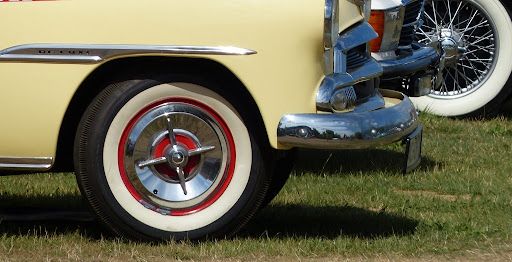
Period-correct tyres typically feature narrower tread widths, taller sidewalls, and tread patterns that suit the proportions of older vehicles. These characteristics play a role not only in aesthetics, but also in how suspension systems operate.
The good news is that several specialist manufacturers now offer tyres that replicate classic designs while using modern rubber compounds and construction methods. These tyres preserve the original look while delivering vastly improved grip, durability, and wet-weather performance compared to historic originals.
Vehicles from the 1960s and 1970s, in particular, tend to perform best on higher-profile tyres that maintain correct ride height and suspension geometry.
Seasonal Considerations for Classic Cars
Classic cars are often more sensitive to temperature changes than modern vehicles, making compound choice particularly important.
Summer tyres :Designed for warmer conditions, summer tyres offer excellent grip and braking performance in dry and wet weather. As temperatures drop, the compound hardens and traction decreases. Best suited to fair-weather or seasonal use.
Winter tyres: Winter tyres remain flexible in cold conditions and provide improved grip on wet, icy, or frosty roads. They can be suitable for year-round use in colder climates.
All-season tyres: All-season tyres offer a balance across varying conditions. While they won’t outperform dedicated summer or winter tyres in extreme environments, they can be a practical solution for classics driven modest distances throughout the year.
Choosing the right option depends on when, where, and how the car is used not just the calendar.
Specialist Insight from the Classic Community
Specialists working daily with historic vehicles, including the team at Classic Collective, consistently highlight tyre choice as one of the most overlooked yet impactful decisions classic owners make.
Their experience reinforces a simple truth: classic cars respond best when tyres are chosen with intention, respecting original engineering while acknowledging modern road conditions and driving expectations.
This specialist-first approach is key to preserving both safety and driving enjoyment.
Final Considerations: Getting the Balance Right
The best tyre choice for a classic car will always balance:
-
Visual authenticity
-
Real-world driving conditions
-
Predictable grip and braking
-
Safe service age
When tyres are chosen carefully, a classic car becomes easier to drive, safer to enjoy, and more confidence-inspiring on every journey, whether that’s a Sunday run or a longer road trip.
Find the right tyres for your classic
If you’re looking for tyres suited to your vehicle, whether period-correct, specialist fitment, or modern compounds for classic use, you can browse available options on ifndautoparts.
Our marketplace connects buyers directly with specialist sellers, workshops, and suppliers who understand classic and performance vehicles.
19 Jan 2026
Tags